Get real work experience before anyone hires you
A Capstone work simulation gives career changers and graduates real work experience, a scored report and a certificate. 20% off with LAUNCH26.
Updated Nov 3, 2026
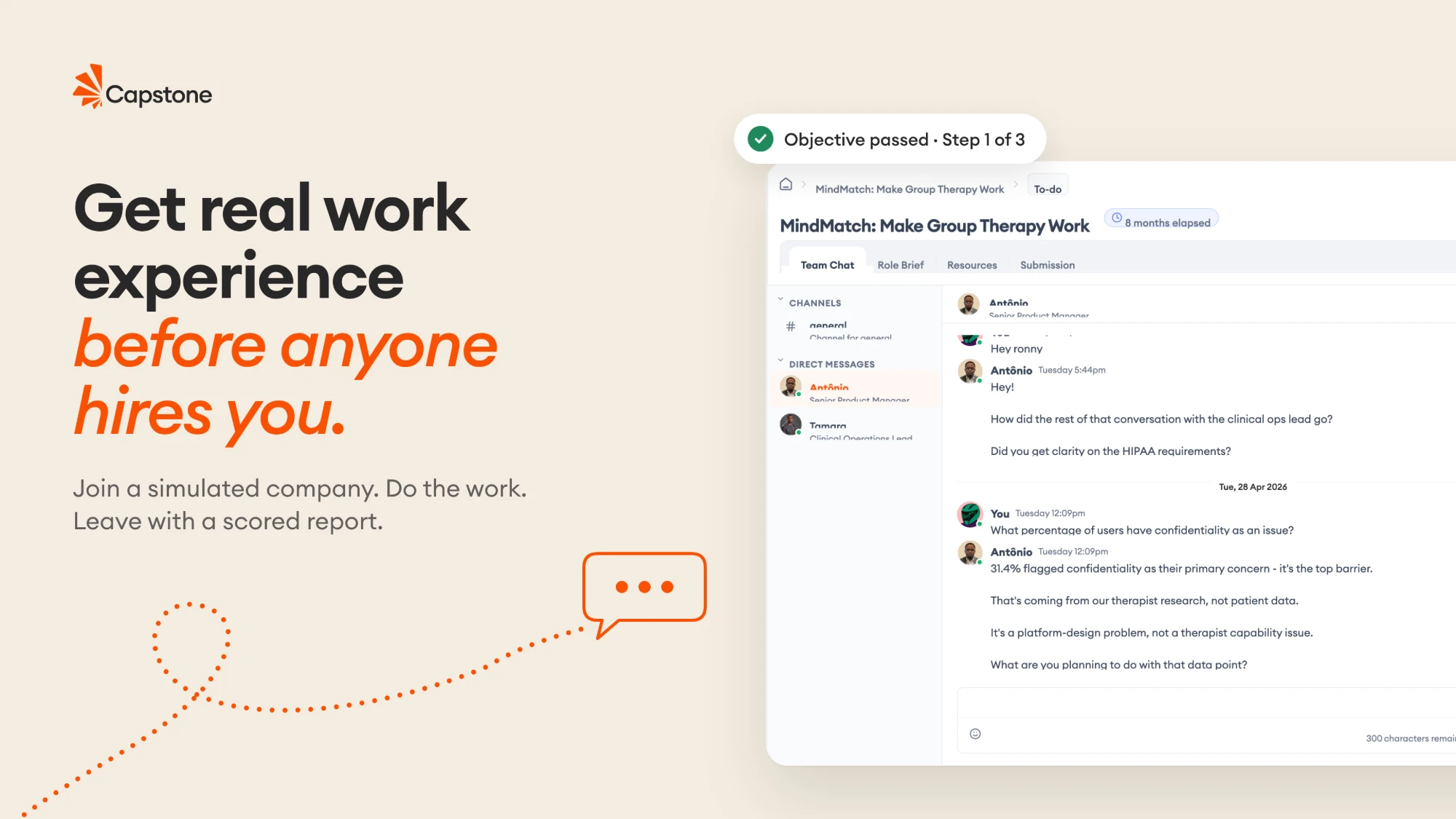
You’ve probably seen this before.
You find a role you’re excited about.
You read through the job description.
Everything looks possible until you get to the requirements:
2+ years of experience required.
Or:
Must have worked in this industry before.
Or:
Previous experience in this role is a must.
And suddenly, you’re back where you started.
How do you get experience when every opportunity requires experience first?
This is one of the hardest parts of changing careers or starting out.
You can read the books.
You can finish the courses.
You can watch all the videos.
But eventually, employers want to see one thing:
Can you actually do the work?
Capstone simulations give you that experience. A work simulation places you in a company that doesn't exist, doing the work a new hire would do, and ends with a scored report and a certificate. Simulations are open to anyone with a Capstone account; each one lists its price in the catalogue, and you can start today.
What is a work simulation?
It’s a project inside a simulated company. You do the work a real hire would do, and you’re assessed on how you did it.
You'll also hear them called job simulations or virtual work experience. Many are short, free and sponsored by a big employer, and they're a good way to find out whether a field interests you. Ours are built for the step after that: a full project, a team to work with, and a clear read on your work at the end.
Why we built it
To get the job, you need experience. To get experience, you need the job. If you're switching careers or just out of university, that loop can feel impossible to break.
When two candidates look equally qualified on paper, relevant experience is usually what tips it. In NACE’s Job Outlook 2026 survey, employers said an internship with them or in their industry was the most influential factor when choosing between otherwise equal candidates. That’s fine if you’re 21 and can take an internship. It’s a lot harder if you’re 34, changing careers, and have rent to pay.
Hiring on skills could open the door wider. LinkedIn's research finds that talent pools would grow six times over globally if employers hired on skills, with people without degrees gaining slightly more. That only helps you if you have a way to show your skills.
So we built simulations to be the closest thing to that first internship: real work, people to work with, and a record of how it went.
How it works
Join a company and meet your team
You start with a role brief and a company to get to know. Your team works in channels and direct messages, the same way most workplaces do. Ask questions, share drafts and chase what you need.
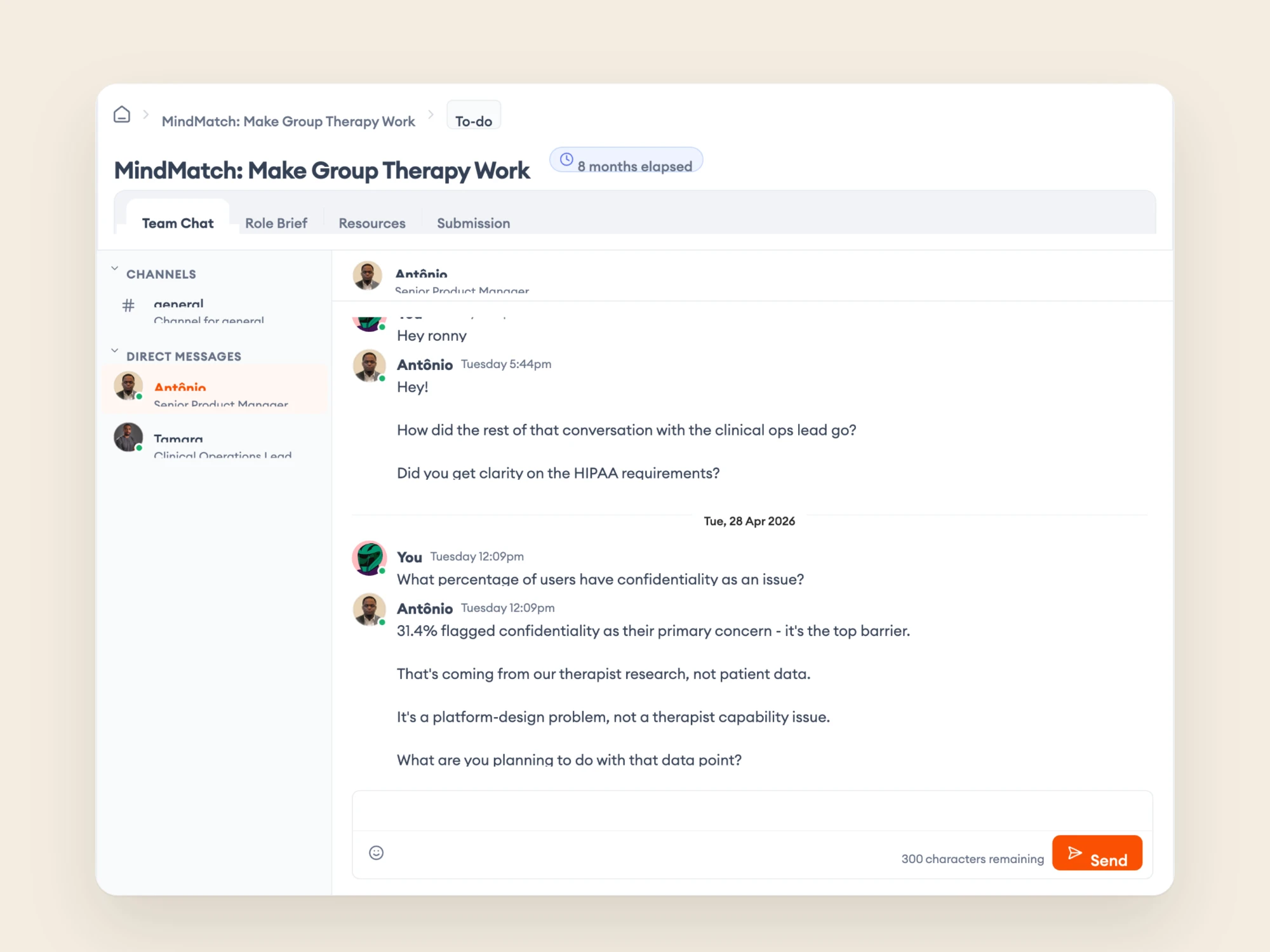
Your team works in channels and direct messages.
Move your work across the board
Every project has a board with three columns: to do, in progress and done. Each task carries its brief. You attach your files when you submit, and comments stay on the task, so the conversation sits next to the work.

Tasks move from to do to done, with your files and comments attached.
Finish objectives in order
Objectives come one at a time. Finish one and the next opens up, so the work builds the way a real project does.
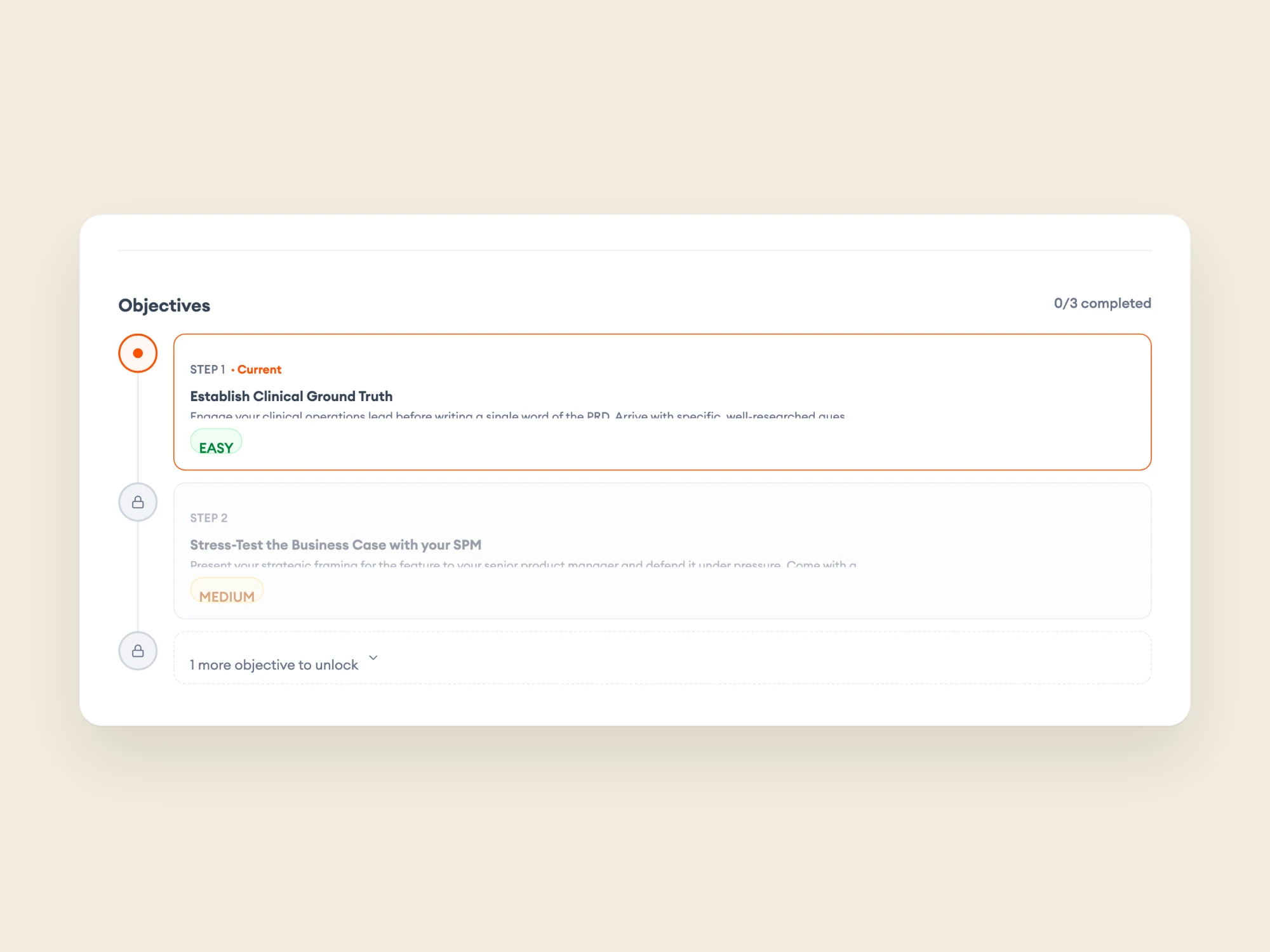
Each objective you finish opens the next.
Pick a role and an industry
Filter the catalogue by industry, level, duration and job title. Today you can work as a product manager or a product marketer, in companies across HealthTech, Fintech and event tech.

Filter by industry, level, duration and job title.
Leave with a report and a certificate
When you finish, you get a scored report on how you worked, with written feedback on each part of the simulation. You also get a certificate you can add to LinkedIn, and anyone can check it's real.

A scored report and a certificate you can share.
Who it's for
You're switching careers. You've spent years in teaching, sales or operations, and nothing on your CV says "product marketing". A simulation gives you finished work in the new role to point to.
You're about to graduate, or just have. You've sent internship applications and heard nothing back. A simulation gives you a project to talk about in your next interview.
You're curious about a different role. You want to know whether you'd enjoy product work before you spend a year chasing it. A simulation lets you try it first.
What it doesn't do
It isn't a job and it isn't paid. The company is fictional, and so is the project.
It doesn't guarantee an interview or an offer. It gives you work and feedback you can use in your search.
Live roles are product management and product marketing. Growth Marketing, Customer Success, Cybersecurity and Sales are coming soon.
You work in your browser for now. There's no app to download and no special tools to set up before you start.
Availability and pricing
Simulations are open to anyone with a Capstone account. Each one lists its price in the catalogue. Until 31 Dec 2026, code LAUNCH26 takes 20% off any simulation or pathway. We'll update this post when the offer ends.
Get started
Sign up or log in at usecapstone.com.
Answer a few short questions about your experience and the roles you're aiming for.
Open the catalogue and filter by industry, level, duration or job title.
Pick a simulation, read the role brief and start.
Enter LAUNCH26 at checkout before 31 Dec 2026.
What we want to hear from you
Which role should we build next, and why?
After your first day, did the work feel like the job you're aiming for? Tell us what felt off.
Send your answers to hello@usecapstone.com or use the feedback form here
FAQ
FAQ
- What is a work simulation?
A work simulation is a project inside a simulated company, where you do the work a new hire would do. On Capstone you work with your team, hand in real deliverables and finish with a scored report and a certificate.
- How do I get work experience without a job?
The usual routes are internships, volunteering, freelancing and personal projects. A work simulation adds another option: finished work in the role you want, plus feedback on it, without waiting for someone to hire you first.
- Are job simulations worth it?
It depends on what you need. A short, free simulation is a good way to explore a field. If you need work to show and honest feedback on it, choose one that scores your work and gives you a record you can share.
- Which roles can I try?
Right now you can work as a product manager or a product marketer, in companies across HealthTech, Fintech and event tech. Growth Marketing, Customer Success, Cybersecurity and Sales are coming soon.
- How long does a simulation take?
Simulations are self-paced, so you work when it suits you. Each one shows its length in the catalogue, and you can filter by duration to find one that fits your week.
Sources
NACE: Internship experience often the deciding factor between equal candidates (Job Outlook 2026, published 9 Feb 2026)
LinkedIn Economic Graph: Skills-Based Hiring, Increasing Access to Opportunity (3 Mar 2025)
Keep reading
- pathways
- learners
- careers
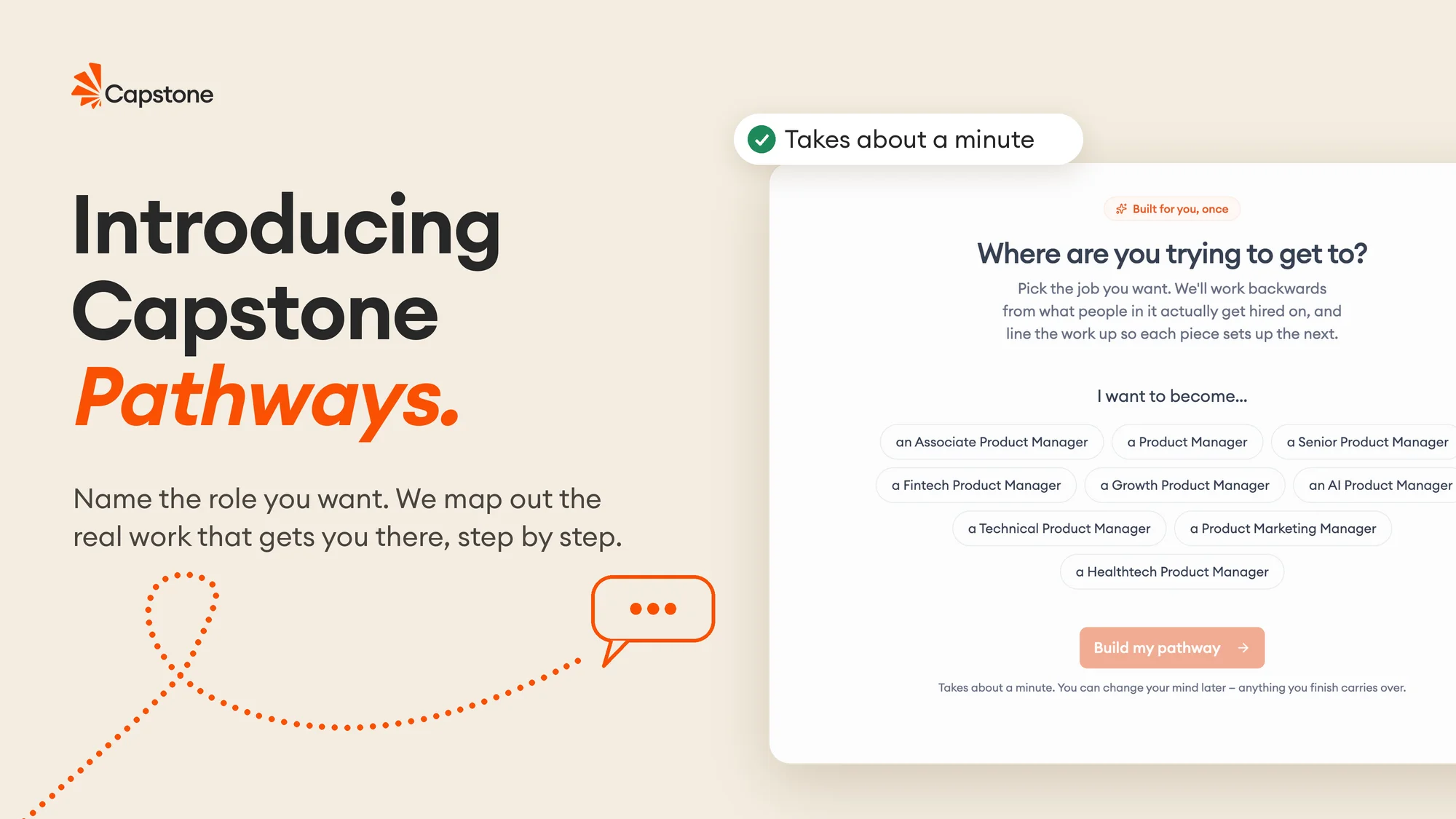
Tell us the role you want. We'll map the work that gets you there.
Name the role you want and get a personalised career roadmap: the skills to build, in order, each one practised as real work. Sold on its own.
- hiring-teams
- assessments
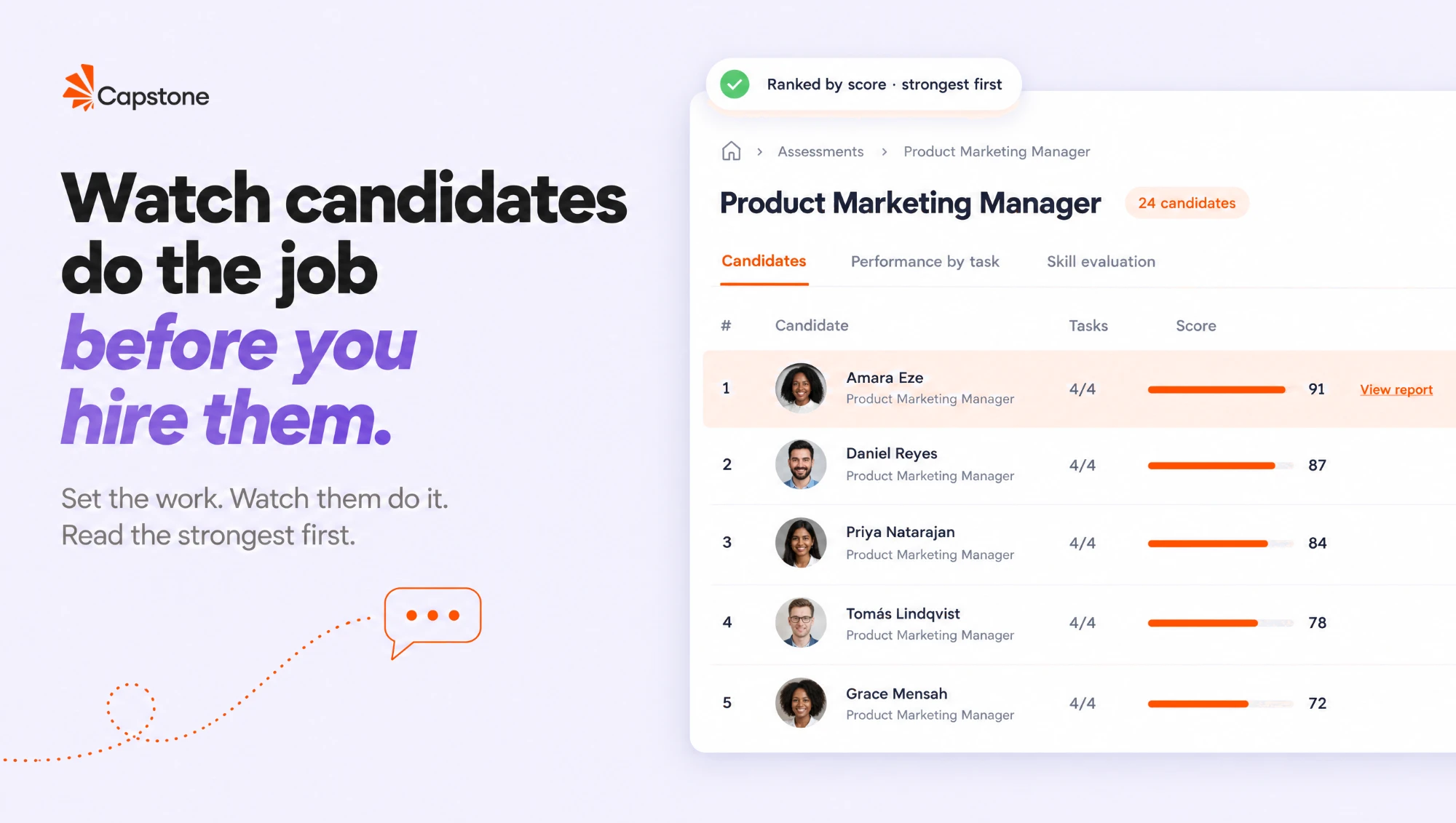
Watch candidates do the job before you hire them
Hiring for a non-technical role? Watch candidates do the work in a simulated company. Free to build, free for candidates, results private to you.